
 4.7
4.7
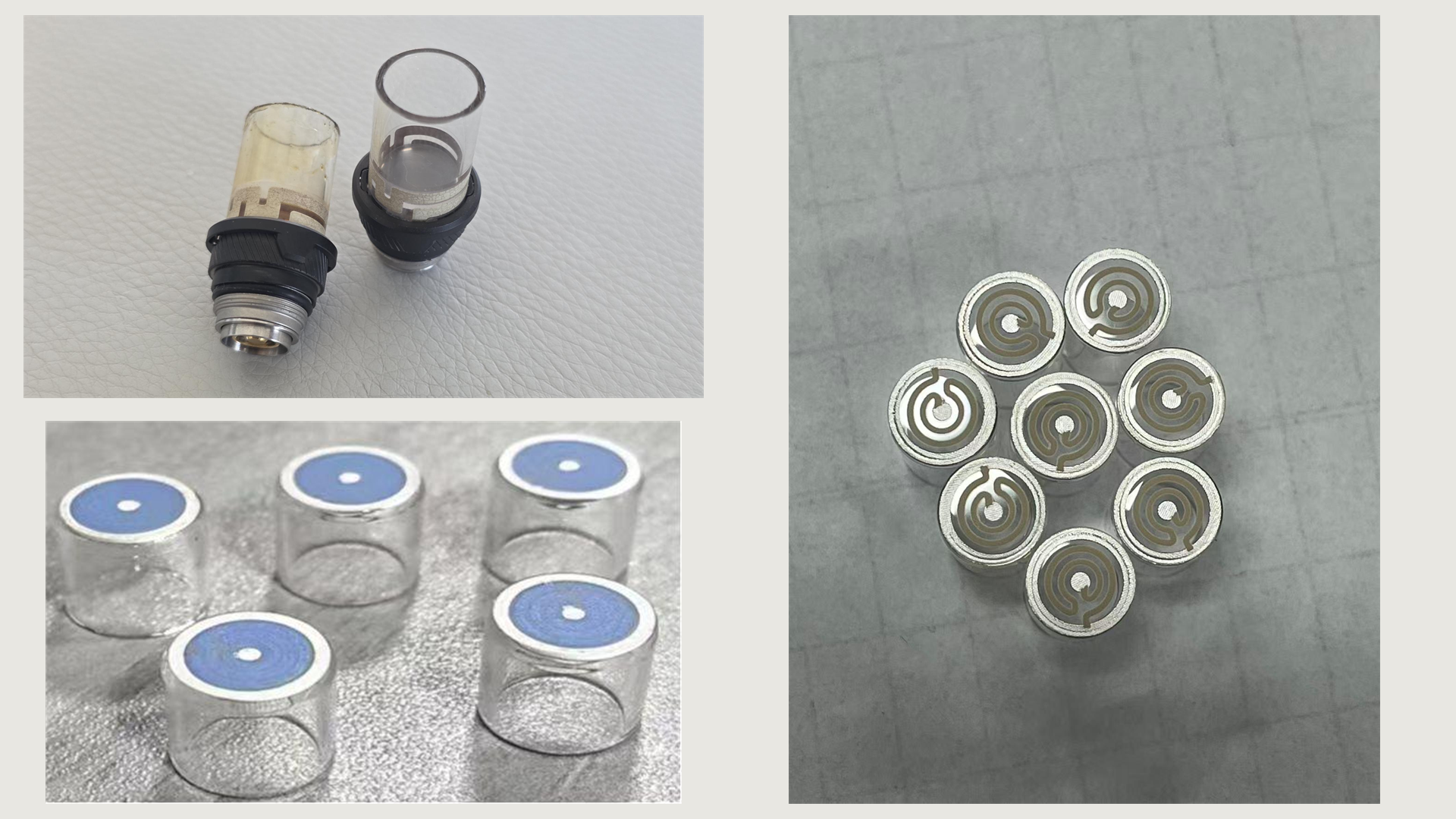

In this post and the Watch the See-Through Heating Chamber Video on YouTube, I’m introducing a new heating-chamber technology for concentrate vaporization. I’m publishing it in full so the design and its variations are part of the public record and available to the whole industry.
The Chamber: A Crucible You Can See Through
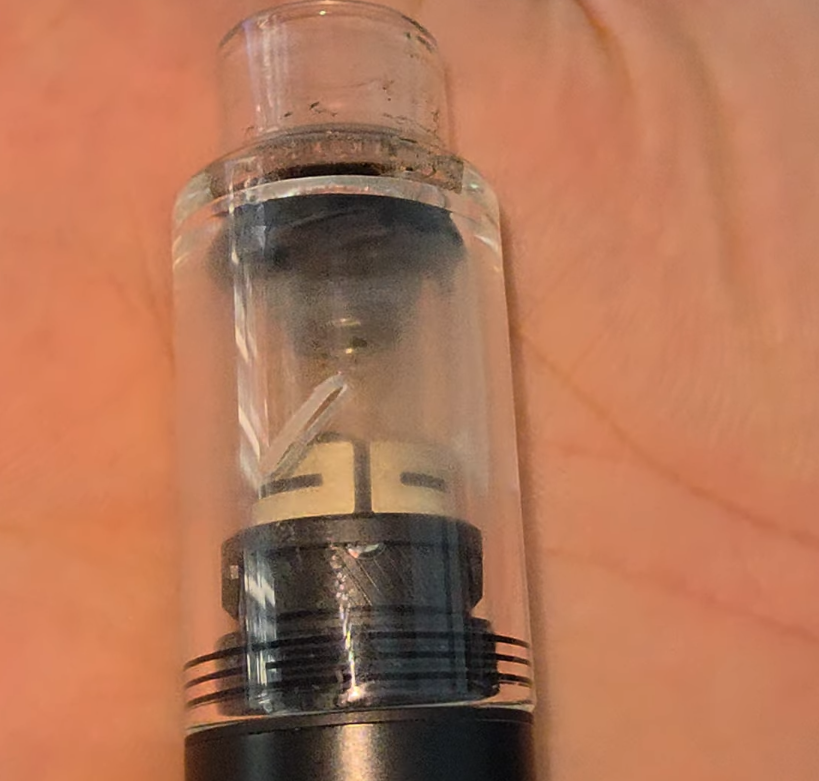
The heating chamber is a crucible made of borosilicate glass or quartz and manufactured to be heat resistant. It has one or more sidewalls and a bottom. The bottom has no inlet or outlet holes for air or gas. The crucible serves as the reservoir for the vaporizable material, and liquid concentrate collects inside it as it heats (03:05).
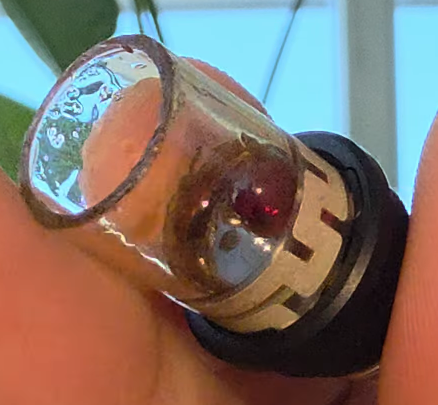
Because the crucible is glass or quartz, it’s see-through. As far as I’m aware, this is the first transparent glass heating chamber with sidewall heating or all-wall heating including the bottom (00:53). You can watch the concentrate gather in the center while it vaporizes.
The Heating Element: Printed on the Outside, Not Embedded
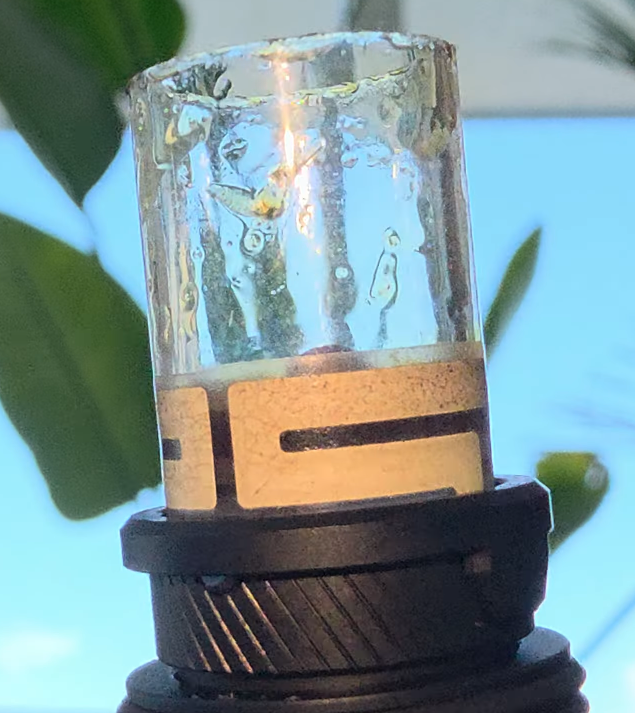
The heating element is a trace printed onto the outside of the crucible, where it’s in full contact with the outer wall (00:03). It is printed on securely rather than just placed against the glass, and it is not embedded inside the wall (02:51). When the external trace is powered, it heats the crucible and vaporizes the material inside (00:53).
The trace can be a filament, trace, or alloy, and many different metals can be used. The essential requirement is stability: the material must not off-gas. No molecules should detach from the chamber wall and enter the surrounding air or the vapor path.
Heating Configurations
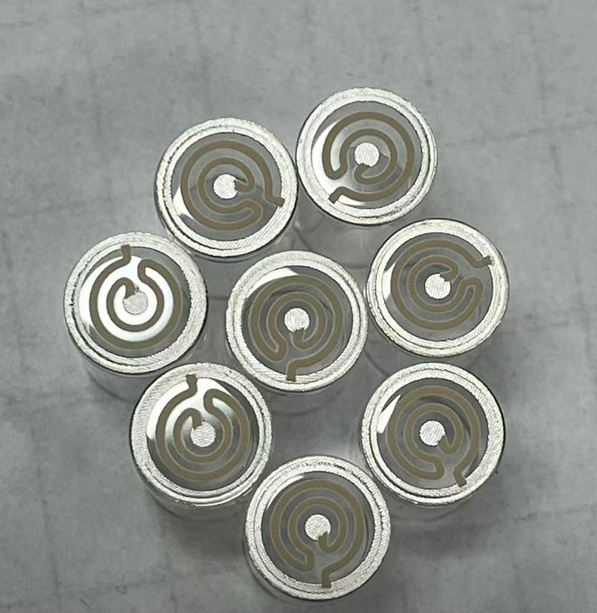
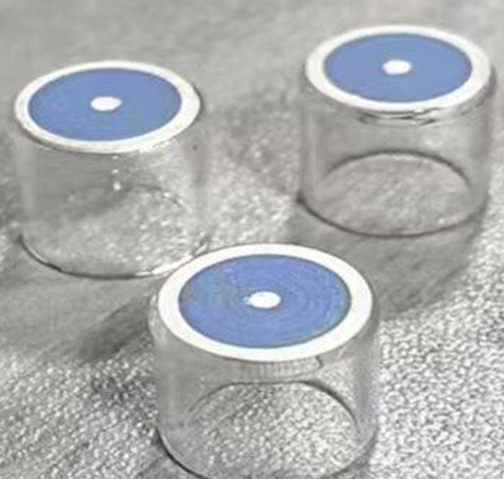
The heater can be laid out in several ways, and the video shows heating on both the sidewall and the bottom (00:03). The crucible variants pictured below cover the three basic layouts (02:45):
- Sidewall heating only
- Bottom heating only
- Combined sidewall and bottom heating
Depending on how the trace is laid out and driven, the chamber can run with the sidewalls hotter than the bottom, or with the bottom hotter than the sidewalls.
Airflow
Air enters the crucible from the top and reaches the heated material. There, it picks up vaporized material, so the air that came in leaves as vapor, and that vapor exits through the top. Because the bottom has no openings, all airflow enters and leaves from above.
Temperature Sensing and Control
To hold a specific vaporization temperature, the device senses the chamber’s temperature in one of two ways (00:53–01:56):
- Through the heater itself. The device reads the metal heating trace on the outside of the walls.
- Through a separate RTD sensor. This is the method shown in the video. The RTD sits at the bottom of the crucible on its own wiring.
Either way, the sensor governs how much power goes to the heater and keeps the temperature relatively stable (01:56). The electrical contacts run from the chamber down into the base of the device, where they connect to the control board. The board brings the material to the right vaporization temperature for whatever has been loaded.
Thermal Isolation
The crucible has to be mounted with a deliberate gap between it and the surrounding device body (02:16). This keeps the body of the device from getting too hot while the center of the chamber stays at vaporization temperature.
Detachable or Fixed
The chamber can be permanently fixed in the device or made detachable. Our implementation is detachable. Detachable chambers have been common practice since the beginning of this product segment, and they make the chamber replaceable or interchangeable.
Vapor Delivery
Vapor exits through an outlet section of the chamber, which we call the mouthpiece. From there it can go directly to the user. It can also go into a separate container that stores vapor for later use, such as a glass vessel, a balloon, or any other vapor container.
What’s New
Heating elements can now be applied directly to glass and quartz. Previously, the comparable approach used soft ceramic sheets: the heater was placed on the sheet, the sheet was rolled up, and the heater ended up embedded inside the ceramic. Now the glass or quartz crucible is formed first, and the heating trace is printed or fastened securely to its outside surface. The result is a transparent heating chamber with a heater that is fully external and never embedded.
This information is now public (03:14).