
 4.7
4.7Best Ball Vapes 2026
By Mariano Bustamante Contributions: Kirill Shelest, Clemens Tscheka
Last updated by
Ball vapes have become one of the most innovative evolutions in vaporizing technology, offering a new way to achieve powerful and efficient extraction. Although the concept has existed for several years, the technology behind it has been continually improved. Modern designs have made ball vapes easier to use and far more consistent, offering a solid alternative for those interested in both the engineering behind the device and the flavor experience it provides.
Finding the best ball vape can be challenging, especially as new models continue to enter the market with different materials, power setups, and heating designs. Here at TVape, we have been testing and reviewing vaporizers for over a decade, and we created this ball vape ranking to help guide users through this growing category.
Our team of experts evaluates each ball vaporizer across the factors that matter most, including vapor quality, temperature consistency, airflow, and overall build craftsmanship. Below, we explain these key factors in more detail, along with how our testing process ensures each device is fairly and thoroughly assessed.
Below, you’ll find our 2026 picks for the best ball vapes.
VapVana Ace
"Best Overall"Ball Vape9.1Score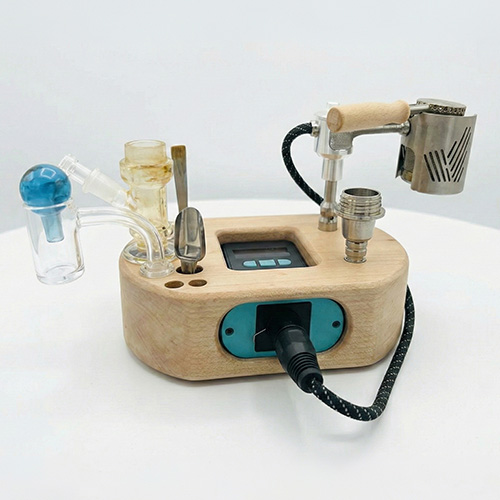 The Vapvana Ace is an all-in-one desktop ball vape kit designed to provide consistent, high-powered dry herb extraction with added versatility for concentrate use. Built around Vapvana’s armored “Hot Hole” heater system and a gem-packed convection head, the Ace emphasizes sustained temperature stability, smooth airflow, and even roasting across larger bowls. The kit includes a PID controller, dedicated stand, multiple glass adapters, replacement screens, and a quartz banger setup, making it a comprehensive option for users who want both flower and dab capability in one station. With its upgraded packaging, durable construction, and thoughtful accessory integration, the Ace is positioned as a feature-rich desktop solution within the ball vape category.
- Best For: Users seeking a complete desktop kit for flower and occasional concentrates
- Vapor Quality: Dense, flavorful vapor with stable heat retention
- Build Quality: Robust heater design with titanium and gem-based components
- Ease of Use: Straightforward PID operation with a full starter-friendly setup
Pros / Cons
PROS
- All-in-one kit with strong accessory support
- Even extraction and smooth airflow design
- Compatible with both dry herb and quartz dab use
CONS
- Desktop-only setup with limited portability
- Larger heater footprint requires dedicated space
Wireless One Hit Wonder V2
"Best Beginner-Friendly"Ball Vape9.1Score
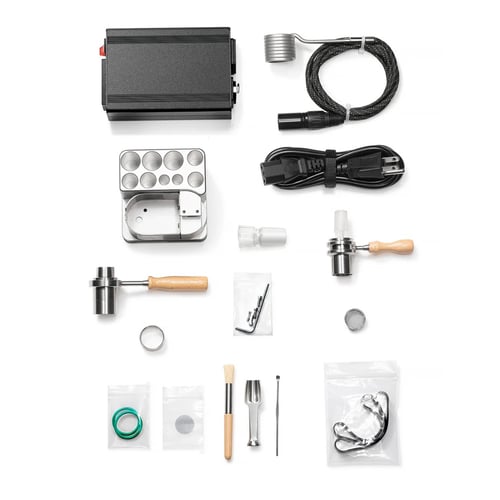 The Wireless One Hit Wonder V2 is a cordless ball vape head designed to operate with a standard 25mm coil system. It supports both diffuser and injector style bowls, allowing users to adjust airflow characteristics and extraction style. The heater design prioritizes open airflow and fast convection response, enabling thorough extraction in short draw cycles. It is available as either a standalone head or bundled with compatible PID and coil components. The device focuses on accessible entry into wireless ball vape setups while maintaining compatibility with widely used third party glass and hardware standards.
- Best For: Users seeking maximum cordless ball vape performance at a lower price point
- Vapor Quality: Dense, flavorful vapor with strong convection power
- Build Quality: Durable stainless steel or titanium options with broad compatibility
- Ease of Use: Straightforward wireless setup with flexible bowl and coil choices
Pros / Cons
PROS
- Clears a full bowl in one dense, heavy draw
- Wireless heater moves freely from dock to glass
- Injector and diffuser modes from a single heater
CONS
- Takes a long time for the heat to properly soak
- The heater, bowl, and coil get very hot and need careful handling
- Takes time to learn how heat soak and draw speed affect each hit
Product Specification
- Compatibility:
- Dry Herb (Cannabis)
- Manufacturer Warranty:
- 1-Year Limited Warranty
- TVape Warranty:
- Hassle-Free Warranty
- Brand:
- SZ CROSSING
- Manufacturer HQ:
- China
- Utillian Bubbler Compatibility:
- No
- Iceborn Compatibility:
- No
- Operation Method:
- Multi Button, Digital Display
- Bowl Size:
- Medium
- Heating Technology:
- Convection
- Temperature (Voltage):
- Precise Temperature Control
- Heat Time:
- 60+ Seconds
- Form Size:
- Large
- Materials:
- Metals, Ceramics, Glass
- Power Options:
- Proprietary charger
Performance Specs
- Vapor Quality9.3
- Manufacturing Quality8.5
- Temperature Flexibility9.3
- Ease of Use9.0
- Overall Score9.1
Crossing Ruby Twist Pro Ball Vape Kit
"Most Versatile"Ball Vape9Score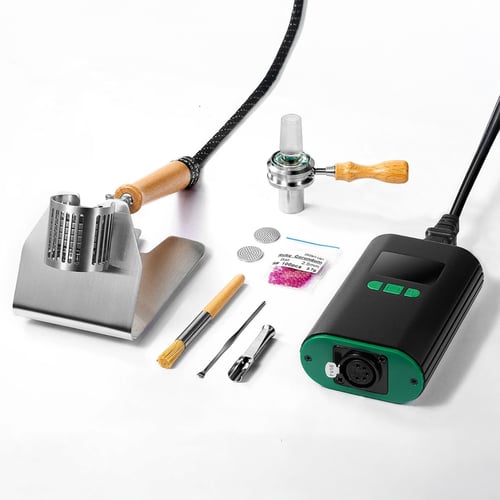 The CrossingTech Ruby Twist Pro is a ball vape that builds on the original Ruby Twist design (vortex piece that creates tornado-like airflow) with a slightly more modular design. It's a wired unit, so it has a cable that connects to your PID controller. In a general sense, the unit is mainly used for convection heating, with a potential for hybrid heating depending on how long you heat-soak the heater on the bowl. It's mainly made of Titanium and stainless steel, which makes it super inert for flavor, and instead of gem-cut rubies like the previous version, it uses spheres instead. One of its main features, in our opinion, is that it lets you remove the vortex piece and use a screen instead, giving room for more spheres and putting it into what we call performance mode (more heat mass, denser vapor). Overall, it's a great budget unit that can fit all types of sessions.
- Best For: Users who want a budget wired ball vape that adapts to every type of session
- Vapor Quality: Clean, flavorful convection, with denser vapor in performance mode
- Build Quality: Titanium and stainless steel construction with ruby spheres for inert, clean flavor
- Ease of Use: Simple PID workflow with a quick swap between the vortex piece and performance mode
Pros / Cons
PROS
- Dense, flavorful vapor at a great price for a ball vape
- Twist mode for flavor, performance mode for heavier hits
- Load a microdose or a full bowl
- Only needs a short heat soak
CONS
- Corded vape, so it needs to be plugged in
- Customization and modularity add depth but create a learning curve
- Exposed hot coil and housing require attention during use
Product Specification
- Compatibility:
- Dry Herb (Cannabis)
- Manufacturer Warranty:
- 1-Year Limited Warranty
- TVape Warranty:
- Hassle-Free Warranty
- Brand:
- SZ CROSSING
- Manufacturer HQ:
- China
- Utillian Bubbler Compatibility:
- No
- Iceborn Compatibility:
- No
- Operation Method:
- Multi Button, Digital Display
- Bowl Size:
- Medium
- Heating Technology:
- Hybrid Convection
- Temperature (Voltage):
- Precise Temperature Control
- Release Date:
- 2026
- Heat Time:
- 60+ Seconds
- Form Size:
- Large
- Materials:
- Metals, Borosilicate Glass
- Power Options:
- Proprietary charger
Performance Specs
- Vapor Quality9.2
- Manufacturing Quality9.0
- Temperature Flexibility9.1
- Battery Life9.0
- Ease of Use9.0
- Overall Score9.0
Vapvana Screwball Starter Kit
"Most Innovative"Ball Vape9.0Score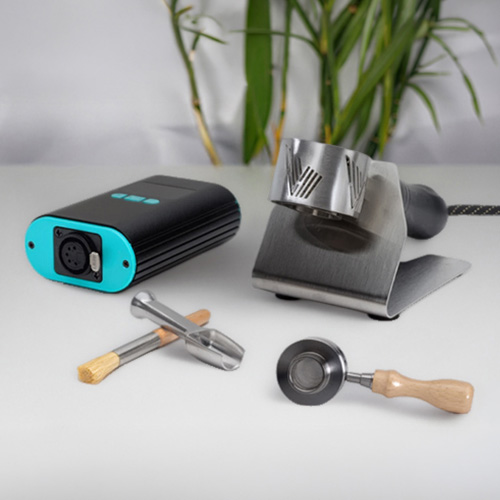 The Vapvana Screwball is a desktop-style ball vape designed to deliver strong, even extraction with a unique gem-based heat exchanger. Instead of traditional spherical rubies, it uses hundreds of small gem-shaped corundum pieces inside a titanium housing to maximize surface area and heat transfer. Paired with a large six-wrap coil heater, an all-titanium bowl, and a spacious capacity, the Screwball is built for consistent, full-bodied vapor with smooth low-temperature performance. Its simple, durable construction and distinctive heating approach make it a notable option within the broader ball vape category.
- Best For: Users looking for a gem-style desktop ball vape with even extraction
- Vapor Quality: Thick, consistent vapor with strong low-temp capability
- Build Quality: Titanium housing and bowl with high thermal efficiency
- Ease of Use: Standard PID setup with a slightly tighter draw profile
Pros / Cons
PROS
- Even herb extraction across large bowls
- Unique gem-shaped ruby heat exchanger
- Robust titanium construction
CONS
- Desktop-only format with less portability
- Airflow feel slightly tight
CrossingTech One Hit Wonder
"Best Affordable"Cordless Ball Vape8.9Score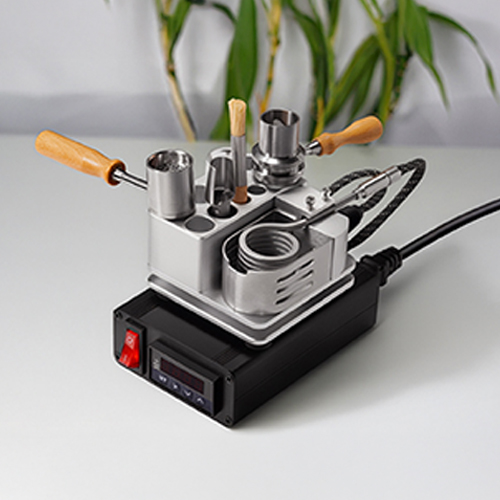 A cordless injector built for quick, decisive clears without a desk full of gear. You keep the head on its dock, lift it when you are ready, and drop it onto your glass for a strong one bowl extraction. Heat up is fast, airflow is open, and the routine is simple enough to learn in a session. It shines at room to room moves and short sessions where convenience matters more than running a coil all afternoon. Recovery happens back on the dock, so it is not a marathon rig, but for cable free hits with a compact footprint and a safe place to park hot parts, it delivers exactly what it promises.
- Best For: Users who want high performance and cordless operation
- Vapor Quality: Short, hard extractions with satisfying density.
- Build Quality: Compact head and secure dock made for frequent handling.
- Ease of Use: Simple but effective, heats up quickly after the first heat-up.
Pros / Cons
PROS
- Cordless setup for room to room use
- Quick heat up for single clear bowls
- Compact Head and safer heating dock
CONS
- Short session windows compared to wired devices
- Lesser heat preservation
Universal Baller
"Best Heavy Hitter"Ball Vape8.8Score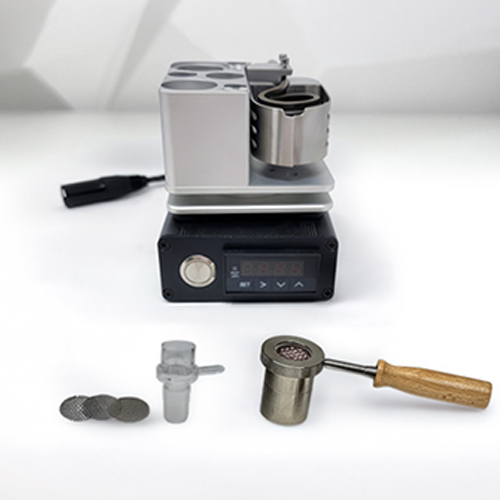 A clean tasting, modular system built for users who want one station to cover bright flavor sessions and heavy output. The vapor path leans on glass and quartz for purity, while an armored thermal core adds real heat holding power so long pulls stay consistent. Run it cordless from a dock for room to room moves or add a coil when you want faster recovery and higher ceilings. Bowl choices and swappable media let you set draw feel, ramp speed, and roast, and standard 14 and 18 mm fittings make it easy to drop into the glass you already use. If you want a single platform that can shift from terp chasing to thick clears without changing setups, this is the flexible pick.
- Best For: Users who want one setup for both purity and power.
- Vapor Quality: Ultra-clean vapor path that prioritizes glass for purity.
- Build Quality: Solid construction that uses high-quality materials like ruby and quartz.
- Ease of Use: Straightforward once set up, with swappable bowls and media for customization.
Pros / Cons
PROS
- Pure material selection for flavor
- Strong thermal mass for heavy extractions
- Open airflow
CONS
- Cordless mode takes longer to reheat up
- Higher maintenance requirements
Tempest 2
"Best Portable"Ball Vape8.6Score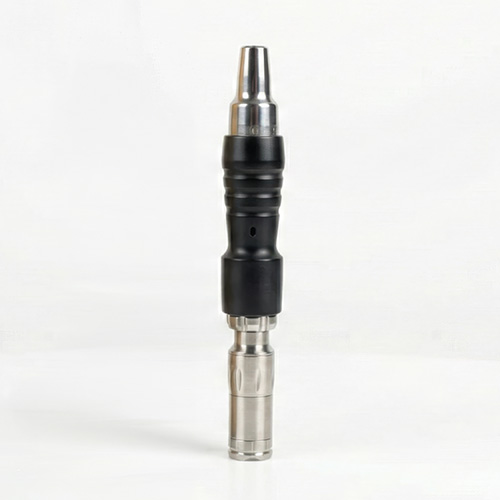 The Tempest 2 is a portable ball vape built around a Grade 5 titanium core with an aluminum heat shield and a zirconia ball filled heater. It uses torch or induction heating to generate convection driven extraction in a compact format. This system makes it more akin to a Dynavap than a full on Ball vape rig like setup. The internal cooling system helps moderate vapor temperature despite the high output potential, and the adjustable bowl capacity allows users to tailor load size. Airflow media options and accessory integration, including a dedicated case and Reload system, support portability and structured daily use. Its design centers on delivering full convection performance in a handheld butane powered format.
- Best For: Users want the strongest portable ball vape performance
- Vapor Quality: Dense, flavorful, and smooth with excellent cooling
- Build Quality: Titanium and aluminum construction with precision components
- Ease of Use: Torch-based learning curve but intuitive once dialed in
Pros / Cons
PROS
- Powerful convection-driven extraction
- Excellent vapor cooling system
- High-end materials and strong accessory support
CONS
- Longer cooldown time between sessions
- Torch heating requires technique for consistency
CrossingTech Ruby Twist
"Best Budget"Ball Vape8.6Score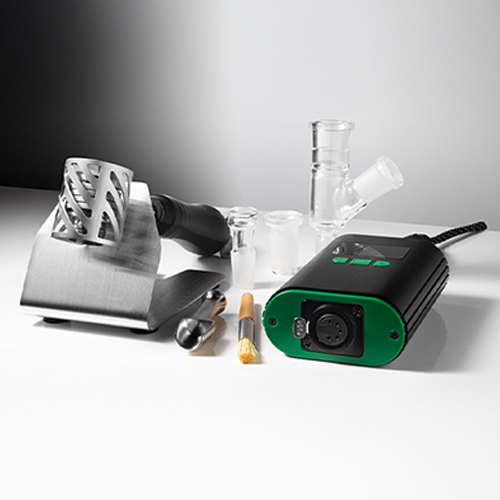 An affordable injector that covers the core ball vape experience without cutting the parts that matter. The twist style head pairs titanium with ruby media for efficient heat transfer and clean taste, and the bundle ships with the pieces you actually use so setup is quick. Two bowl sizes give you range from thick, satisfying clears to lighter flavor focused pulls, and standard 14 and 18 mm fittings drop into most glass. Airflow feels smooth and forgiving, stirring is minimal, and maintenance is straightforward with easy to source screens and spares. If you want a ready to run kit that hits well above its price and grows with a few simple tweaks, this is the value choice.
- Best For: Users who want high performance on a budget.
- Vapor Quality: Clean convection you can tune from bright flavor to heavy roasts.
- Build Quality: Precision metal parts with 14 and 18 mm glass fit, built to last.
- Ease of Use: Simple to use, with not many moving parts, making it straightforward.
Pros / Cons
PROS
- Strong for its price
- Titanium body and ruby media for clean taste
- Easy Setup and straightforward operation
CONS
- Smaller thermal mass means lower vapor density
- Its budget nature does make it slightly less durable
Cannabis Hardware FlowerPot B1
"Best Flavor"Purist Ball Vape8.5Score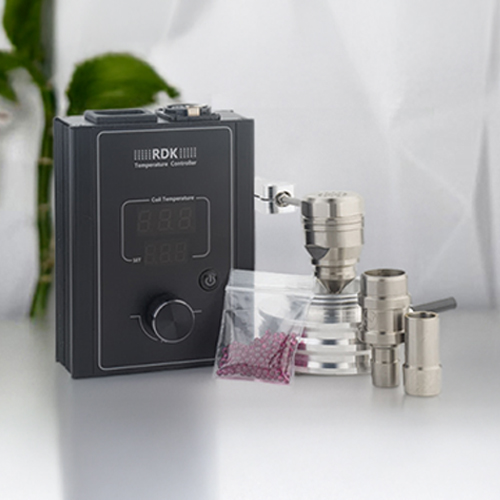 A flavor-first herb dab station with real headroom to grow. It pushes open airflow and strong convection, then lets you tune the feel with different ball media, screens, and standard 14 or 18 mm glass so it drops into the setup you already use. The diffuser style head heats the bowl quickly for fast, thorough extractions, and the mature ecosystem means parts, bowls, and upgrades are easy to source. If you want a reliable daily driver that stays clean on taste, hits hard when you ask it to, and gives you clear ways to customize over time, this is the safe pick.
- Best For: Flavor focused station for users who want high airflow and deep customization.
- Vapor Quality: Clean, convection-focused output that you can tune to your liking.
- Build Quality: Metal components with swap-friendly parts and quartz or ruby balls.
- Ease of Use: Requires a bit more know-how to fully benefit from its customization.
Pros / Cons
PROS
- High airflow with strong convection power
- Very clean tasting vapor
- Precise machining and sturdy parts
CONS
- Hot head requires a safe stand and careful handling
- Airflow can feel too open unless you tune the media
- Higher Price Point
Old Head Terp Hammer
"Best Cordless"Ball Vape8.5Score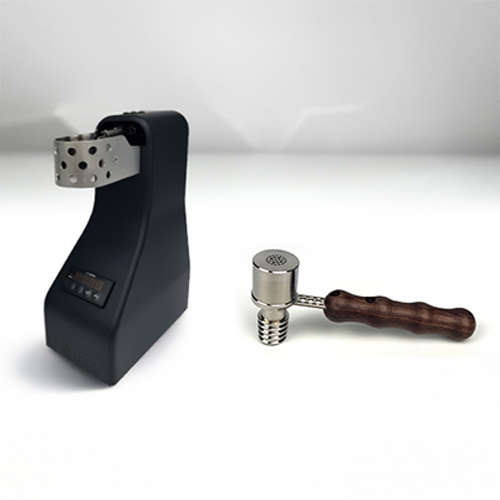 A cordless ball vape that brings desktop level power with clean convection flavor. You park it on the dock, lift it when you are ready, and drop it on your glass to draw. Handling stays simple and the workflow feels natural for room to room use. Recovery on the dock is steady but slower than wired coils, and the head has more heft than minimalist injectors. Still, this setup is widely considered as one of the most premium cordless ball vape experiences available. If you want cable free sessions with true desktop strength and an easy pick up and draw routine, this is still a great fit.
- Best For: Cordless sessions that feel like desktop hits.
- Vapor Quality: Big, clean convection with open airflow and steady heat.
- Build Quality: Thick Titanium shell and durable wooden handle.
- Ease of Use: Pick up, drop on glass, and draw. Clear cues and quick reheat-up time.
Pros / Cons
PROS
- Desktop Level Power
- Clean Convection Flavor
- Pick up, drop on glass, and draw
CONS
- Slower Heat recovery than wired versions
- Heavier than most injectors
Vapvana All-Star Wired Kit
8.3Score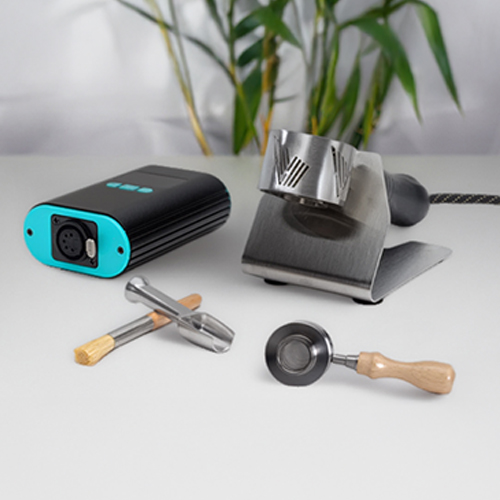 Vapvana All-Star Wired Kit is a wired ball vape designed around consistency, control, and efficient convection through glass. Built as a complete desktop-style setup, it pairs a ruby-filled stainless steel heater with a modular bowl system that supports both smaller half-loads and deeper full-loads. Once heated, the wired workflow delivers repeatable performance from pull to pull, with fast extraction and stable output that responds well to airflow technique. Compared to higher-ranked ball vapes, the All-Star places slightly more emphasis on controlled, flavor-forward sessions rather than maximum raw intensity, making it a practical option for regular, measured use through water filtration.
- Best For: Users who want a reliable wired ball vape with consistent performance
- Vapor Quality: Dense, clean convection vapor with good flavor retention
- Build Quality: Durable stainless steel, ruby core, glass and wood construction
- Ease of Use: Simple PID-controlled wired workflow
Pros / Cons
PROS
- Stable and repeatable performance
- Modular bowl supports different load sizes
- Durable and complete kit
CONS
- Wired and non-portable setup
- Less focused on extreme high-output performance
Comparison table
| Compare products | | |
|---|---|---|
| Price | USD 999.00 | USD 999.00 |
| Overall score | 9.1 | 9 |
| Reviews | ||
| Award | Best Beginner-Friendly Ball Vape | Most Versatile Ball Vape |
| Compatibility | Dry Herb (Cannabis) | Dry Herb (Cannabis) |
| Manufacturer Warranty | 1-Year Limited Warranty | 1-Year Limited Warranty |
| Brand | SZ CROSSING | SZ CROSSING |
| Manufacturer HQ | China | China |
| Utillian Bubbler Compatibility | No | No |
| Iceborn Compatibility | No | No |
| Operation Method | Multi Button, Digital Display | Multi Button, Digital Display |
| Bowl Size | Medium | Medium |
| Heating Technology | Convection | Hybrid Convection |
| Temperature (Voltage) | Precise Temperature Control | Precise Temperature Control |
| Heat Time | 60+ Seconds | 60+ Seconds |
| Form Size | Large | Large |
| Materials | Metals, Ceramics, Glass | Metals, Borosilicate Glass |
| Power Options | Proprietary charger | Proprietary charger |
| Release Date | - | 2026 |
What is a Ball Vape?
A ball vape is a dry herb vaporizer that uses a packed bed of heated media to create powerful convection instead of relying on a traditional heated chamber. Most popular ball vapes use mostly spherical beads, which is where the name comes from, but the idea has evolved. Newer devices experiment with shapes like diamonds or faceted media that sit closer together, leaving less empty space between contact points. This tighter packing increases thermal density, helps the head retain heat more effectively, and can produce more consistent vapor with less recovery time between draws.
Because ball vapes operate at high temperatures and often draw more power than standard portable vaporizers, safety has become an important part of the category’s evolution. Early setups were mostly hobby projects and required more user awareness around hot parts and exposed coils. Modern designs place greater emphasis on insulation, stable power delivery, and safer handling, especially in cordless systems that use docks or bases rather than being plugged directly into the wall. As the category grows, manufacturers are gradually moving toward designs that keep the performance that ball vapes are known for while reducing risk and making the overall experience more controlled and dependable.
Types of Ball Vapes
Ball vapes can be grouped into a few main types based on how the head meets the bowl, how they are powered, and the type of media used inside the heater. These design choices have a big impact on flavor, extraction speed, and how the device feels to use.
Injector vs Diffuser Heads
In ball vapes, the injector and diffuser styles refer to how the heated head interacts with the bowl and how hot air moves through your herbs. Both styles use heated media to create convection, but they guide the air in different ways and create a different balance between flavor, speed, and intensity.
In an injector setup, the head slides into a glass bowl and stops above the herbs rather than sitting directly on them. There is a small but clear gap between the end of the injector and the surface of the material. When you draw, air is heated as it moves through the balls, then flows across the open space before passing through the herbs. Because the head does not press against the bowl and the contact with the herb is indirect, the extraction relies mostly on convection. This usually means slightly slower but very even roasting, with more focus on flavor, subtle terpene notes, and efficient use of the material.
In a difuser setup, the head rests on a bowl, usually made of metal and shaped specifically for that head. Instead of reaching down into the bowl, the hot section of the diffuser sits very close to the herb, with the bowl walls and floor picking up heat directly from the head. When you draw, the air is hot, and the bowl itself is hot, so the herbs receive a mix of convection and conduction. This contact-driven heating ramps up faster, hits harder, and can clear a load more quickly than an injector. It is ideal for users who want strong, fast extractions and dense vapor, but it can also push the herbs toward darker roasts and harsher vapor.
Corded vs Cordless Ball Vapes
Another important feature many users consider when choosing a ball vape is how it is powered. Corded and cordless systems both use the same basic idea of heating a packed media bed, but they feel different in daily use and are better suited to different types of sessions.
Corded ball vapes stay connected to a controller that powers the coil or heater the entire time the unit is on. Once the head reaches temperature, it can hold that heat very steadily as long as the controller remains active. This gives strong heat recovery, very stable performance over longer sessions, and makes it easy to take repeated hits without thinking much about timing. Corded setups are usually preferred by users who want predictable behavior and do most of their sessions in a fixed spot, since the cable and controller are part of the layout on the table.
Now, when it comes to cordless ball vapes, they use a dock, base, or heater station to bring the head up to temperature, after which the hot head can be lifted and used without a cable attached. Between hits, the head goes back on the dock to maintain or recover heat. This style improves handling and safety, because the hot head has a dedicated place to rest and you are not managing a cord while passing or rotating the device. Cordless systems are still evolving, with manufacturers working to balance power, heat retention, and recharge or reheat times so they feel as consistent as a corded setup while offering more freedom of movement.
Ball/Media Materials and Shapes
Another factor that shapes how a ball vape performs is the media inside the heater. Now, when we say “media,” it’s essential to understand that all I’m referring to is the “balls” in the bowl. This media stores the heat that the air picks up as it travels through the head. Even when two ball vapes share the same heater design, changing the size or geometry of the media can noticeably change flavor, extraction speed, and recovery.
To explain a little further without getting super technical, smaller media leaves less empty space between each piece, which helps heat move into the airflow more quickly and keeps the head hotter during strong or repeated draws. The tradeoff is that it can also make the airflow feel a bit more restricted. Larger media leaves more open space for air to move through, which usually gives a smoother draw but slightly slower heat transfer. The same effect can be reached through different shapes. Faceted or diamond-shaped media sit closer together than round beads, again reducing the gaps between pieces and creating a denser, more heat-packed core inside the head.
Material choice supports these behaviors further. Ruby and sapphire are valued for their strong heat retention and clean flavor; quartz is neutral but more delicate; and metal or ceramic options trade some purity for durability or a different heating profile. When combined, size, shape, and material allow manufacturers to fine-tune how the vape handles airflow, how quickly it recovers, and whether it leans toward slower, flavor-focused sessions or heavier output.
Is a Ball Vape Right for Me?
To understand whether a ball vape is right for you, it helps to look at how herb devices have evolved in general. The first big step away from a traditional bong with a torch was the classic desktop vaporizer. These plugged into the wall, used electricity to heat the herbs, and traded open flame for whips or bags. From there, the market shifted toward portable vaporizers, shrinking everything down, adding batteries, and focusing on convenience and discretion. Over time, portables became more polished but also more locked into a fixed design.
Ball vapes sit in a different place. They are still early in their development as a category, and that freedom shows. Instead of relying on a sealed oven, they use a heated media bed to deliver the kind of power and saturation people expect from a strong rig, but with dry herbs instead of concentrates. That is why many users think of them as the herb equivalent of a dab setup or better known as “herb dabs”. The media itself is still evolving, moving from simple balls to more complex shapes and layouts, and manufacturers are experimenting with different heads, bowls, and power setups to fine-tune how these devices feel.
Because of this, ball vapes tend to appeal most to people who enjoy the process as much as the result. They are a good fit for users who like learning how their device works, adjusting temperatures, changing draw style, and experimenting with different setups rather than just pressing a button and going. They reward attention and small tweaks, and in return, they can deliver a level of vapor density and flavor that is hard to match with a standard portable.
On the other hand, ball vapes are not always ideal for someone who wants a simple, quick session with minimal thought, especially outside the home. They involve a head, a bowl, and usually glass, and they ask for a bit more awareness around heat and setup. If the priority is a compact device that slips into a pocket, runs on a small battery, and needs very little input, a regular portable vaporizer will usually make more sense. If the goal is to get a rig-like experience from dry herbs, with heavy output and strong flavor, and the freedom to tune how it all works, a ball vape is much more likely to feel like the right choice.
Safety and Power Considerations
Ball vapes operate at higher temperatures and power levels than most portable vaporizers, so it is important to understand how they handle heat and electricity in everyday use. The head, bowl, and media all store a significant amount of energy, which is what allows these devices to deliver such strong vapor output. That same stored heat also means certain parts stay hot long after the controller or dock has been switched off, so safe handling and a stable setup are essential.
Corded ball vapes draw power continuously through a controller and coil, keeping the head at temperature as long as the system is active. This is ideal for consistent performance, but it also means the hot parts and the cord should stay on a solid, clear surface where they will not be bumped or pulled. Using a stand, holder, or coil guard designed for the device helps keep the head in a safe position when it is not in use and reduces the risk of contact with the hot metal or media.
Cordless systems use docks or bases that heat the head and then hold that heat between hits. This can improve safety in some ways because the hot head has a dedicated parking place, and there is no cable attached while you are passing or rotating it. At the same time, cordless setups are still powerful devices. The dock should sit on a firm surface away from edges, and the hot head should never rest directly on a table or soft material. As with corded setups, it is best practice to turn the system off when a session is finished rather than leaving it at a temperature unattended.
Regardless of the style, ball vapes should be kept out of reach of children and pets, used in well-ventilated areas, and allowed to cool fully before cleaning or moving any heated parts. Following the manufacturer’s guidelines for power, warm-up times, and cooling intervals is part of how we evaluate safety in our rankings, and we favor designs that make it easy to store, park, and handle the device in a controlled and predictable way.
Maintenance and Cleaning
Ball vapes are high-performance devices, and keeping them in good condition directly impacts flavor, airflow, and how long they remain enjoyable to use. Over time, resin builds up in the bowl, stem, and glass. If that buildup is not managed, draws become harsher, flavor flattens, and the device can feel more restricted than when it was new.
Most of the regular cleaning work happens around the bowl and glass rather than inside the head itself. Bowls made from metal, quartz, or borosilicate glass can usually be soaked in isopropyl alcohol and then rinsed and dried, while smaller parts often benefit from a quick brush and a short soak when they start to look dark or sticky. Some designs allow the media to be removed and cleaned separately, while others are meant to be left in place and only brushed out once the device is completely cool. In all cases, controllers, cords, docks, and any electronic parts should never be soaked or exposed to liquids.
How Hard Is It to Use a Ball Vape
All ball vapes follow the same basic layout. There is a controller, usually a PID controller, that takes power from the wall and lets you set a target temperature. That controller feeds a heating element, often a coil, which wraps around or sits inside a metal housing. This housing, sometimes called a head, engine, or wand, contains the media that stores the heat. Inside that head sit the balls or other-shaped pieces that hold and transfer thermal energy. Finally, there is the bowl and the glass or water piece. The bowl is where you put your herbs, and the glass bubbler or rig is what you actually inhale through.
The process is simple in principle. You plug in the controller, set a temperature, and let the coil and head warm up until the media is saturated with heat. When you draw, room-temperature air is pulled through the hot media in the head. As the air moves through, it picks up the stored heat, then passes through the herbs in the bowl, vaporizing them. That vapor travels through the glass or water piece, cools slightly, and reaches your mouth. Every ball vape you see is built around this same idea, even if the parts look a little different from one brand to another.
As with any vaporizer, you will need a little time to get used to how your specific ball vape behaves, but there are more elements to manage here than with a simple portable vape. You prepare the bowl or glass, move the hot head on and off the piece, return it to the controller or dock, and pay attention to how long it has been heating so it is ready without being pushed too far. There are more moving parts in each session and a bit more manual effort in how you handle and time everything. For a new user, this can feel more complex than turning on a handheld device and inhaling, but with some repetition, it becomes a straightforward routine. In return, ball vapes offer a level of power, control, and vapor production that most portables are not built to achieve, which is why many users see the small learning curve as a reasonable trade-off for the kind of sessions they can deliver. This is as close as you can get to a herb dab.
Criteria we consider when choosing a Ball Vape
Evaluating a ball vape requires a different approach than assessing a Portable Vaporizer or Desktop Vaporizer. These devices are built differently due to their unique heating mechanisms. To ensure our ranking reflects real performance, we examine every ball vape across key dimensions that define its quality, efficiency, and user experience.
Build Quality and Materials
The construction of a ball vape is one of the most important factors in its overall performance. Because these devices rely on stored thermal energy rather than only digital temperature control, the quality of materials directly determines how efficiently heat is transferred and how stable it remains throughout a session. High-grade metals like stainless steel or titanium offer strength and heat stability, while quartz and ceramic components help maintain flavor purity and even heat distribution. The type of balls used inside the heater, whether ruby, sapphire, or ceramic, also plays a crucial role in how consistently the vaporizer performs and how well it preserves flavor. Every detail, from machining precision to seal and joint quality, influences not only vapor quality but also long-term reliability.
What we focus on:
- Type and grade of materials used in the heater and housing
- Precision of machining and components
- Heat stability and resistance to overheating
- Structural durability and overall craftsmanship
Heating Performance
Heating performance determines how effectively a ball vape delivers vapor, and the way these devices heat up sets them apart from traditional vaporizers. While most vaporizers rely on a heated chamber or coil to warm the herbs directly, ball vapes use a heat source that transfers energy into a collection of small spheres. Ball vapes use a PID-controlled coil to charge a bed of thermal balls that retain and distribute heat as air passes through. This design delivers rapid, stable convection that can extract material efficiently while preserving flavor and consistency. We evaluate heat-up speed, temperature stability under repeated draws, airflow path uniformity, and controller precision.
What we focus on:
- Speed and consistency of heat-up and recovery between draws
- Stability of temperature during extended sessions
- Even distribution of heat through the air path
- Responsiveness and precision of temperature control
- Efficiency of extraction across different temperature ranges
Vapor Quality
A well-tuned heater produces dense, flavorful vapor that maintains smoothness even at high extraction levels. We evaluate flavor clarity, vapor temperature, and smoothness across various draw intensities. Devices that deliver rich, full-spectrum vapor without harshness or combustion signs consistently score higher in our rankings.
What we focus on:
- Density and flavor balance of vapor output
- Evenness of extraction and residue buildup
- Performance at both low and high temperature ranges
- Flavor clarity and preservation of terpenes
Airflow and Draw Resistance
Proper airflow is crucial for both comfort and vapor production. We assess how each ball vape balances draw resistance with vapor density, noting whether the airflow feels open and free-flowing (water-pipe style) or restrictive. Systems that maintain strong convection without requiring hard pulls or causing turbulence rank higher. We also examine how easily airflow can be adjusted or paired with water pieces (18 mm/14 mm) for enhanced cooling.
What we focus on:
- Smoothness and consistency of airflow
- Level of draw resistance
- Adaptability for different inhalation preferences
- Compatibility with glassware or water cooling setups
Ease of Use and Maintenance
Although ball vapes are typically designed for enthusiasts, usability still matters. We analyze how intuitive the setup process is, how easily users can clean and maintain the components, and whether the system allows for quick assembly and disassembly. Devices with accessible heaters, well-labeled controllers, and straightforward loading systems are favored.
What we focus on:
- Simplicity of assembly and operation
- Accessibility of the heater and bowl for cleaning
- Maintenance frequency and requirements
- Clear labeling and control layout
Value for Money
Ball vapes vary widely in price depending on materials, heating systems, and craftsmanship. We compare each device’s performance and build quality relative to its cost to determine overall value. A well-engineered model that delivers consistent performance and durability at a fair price will rank higher than one that relies solely on premium materials or brand recognition.
What we focus on:
- Performance relative to price point
- Quality of included accessories and controller units
- Long-term reliability and maintenance cost
- Manufacturer warranty and customer support
Why Our Rankings Are Different
Many ranking pages simply list the most talked-about devices or repeat what is already popular in the community. At TVape, our approach is entirely different. We focus on real-world testing, hands-on experience, and measurable performance rather than trends or brand reputation. Every ball vape featured on this page has been selected based on verified results and consistent quality under extended use.
Because ball vapes are a specialized category, we look beyond marketing claims and evaluate how each device performs where it matters most: heat consistency, airflow precision, vapor output, and build reliability. Our evaluations are informed by hundreds of hours of active use and data collected from both controlled testing and everyday sessions.
Unlike generalized rankings that include every device available, we are selective in the units we choose to feature. This ensures that each recommendation has been thoroughly tested, benchmarked, and proven to deliver performance worth highlighting. Our goal is not to present every option on the market but to identify the few that truly stand out for craftsmanship, engineering, and long-term usability.
By applying the same disciplined testing standards we use for all other vaporizer categories, our ball vape rankings represent more than opinion. They are the result of experience, precision testing, and a clear understanding of what separates a good vaporizer from a truly exceptional one.
How we Test the Ball Vapes Ranked on this page
At TVape, we’re obsessed with getting convection right and we’re committed to giving you testing that’s as rigorous as it is real. When new ball vapes are released, our team works directly with manufacturers or obtains the units through verified distributors for testing. For well over a decade, our team has watched desktop thermal extraction evolve from early DIY rigs to today’s refined ball vapes (the “Herb Dab” style): PID-controlled heater heads packed with ruby, sapphire, or ceramic balls that deliver pure, free-flowing convection. That long view and thousands of hours of hands-on use let us separate clever engineering from clever marketing so our rankings stay practical, reliable, and up-to-date.
Whether you’re chasing the smoothest flavor run, a heavy-hit session through water, or a value build that still punches above its price, we test every device against the same standards of performance, quality, and user experience. When firmware or PID profiles change or when new bowls, heaters, or ball media are released, we re-test to ensure our findings remain accurate.
Initial Assessment
Each ball vape undergoes an initial assessment where our team inspects the overall build quality, materials, and design precision. We evaluate the heater assembly/ball pack and the bowl connection. We also review included accessories, safety compliance, and documentation. This is how we confirm that each product meets the basic durability and design expectations for a ball vape before performance testing begins.
Performance Testing
Once a device passes inspection, we begin real-world testing across multiple sessions to measure performance, vapor output, and consistency. Each unit is tested using the same strain and grind to accurately compare vapor quality, heat retention of the ball mass, and airflow control. We assess extraction efficiency, temperature stability under back-to-back draws, and overall smoothness/flavor. Factors such as vapor smoothness, flavor preservation, and ease of draw are also closely monitored. Devices that present precise thermal control, reliable airflow, and sustained vapor quality under repeated use achieve higher rankings.