 4.7
4.7

Vaporizing cannabis looks simple on the surface. You load material, set a number, and inhale. But anyone who has spent time with different Vaporizers knows that two sessions at similar settings can feel completely different. Flavor changes, vapor density shifts, effects hit harder or softer, and sometimes the experience turns harsh without an obvious reason.
Unlike smoking, vaping gives you direct control over heat, and that control affects every part of the session. Dry herb, concentrates, and cartridges all respond differently to temperature. Even within the same category, device design, heating method, airflow, and material type change how heat behaves once a session starts.
This is why general advice like “low for flavor, high for clouds” only tells part of the story. Real results come from understanding how temperature interacts with cannabis compounds and how different devices apply heat in practice.
Once you view vaping through the lens of temperature behavior rather than just numbers on a screen, the rest of the conversation falls into place. That is where temperature stops being a setting and starts becoming a tool. This guide is designed to help you navigate and understand the complexities as simply as possible.
Why Temperature Matters More Than You Think?
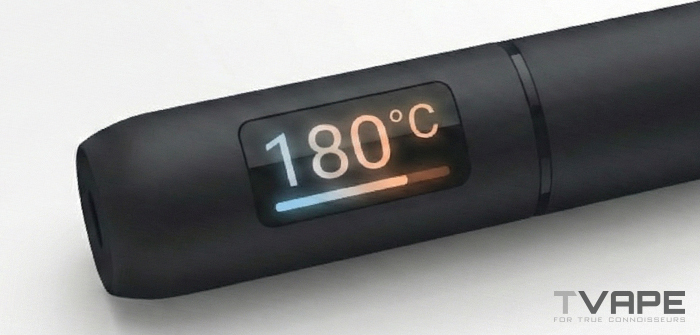
Before we explain the ins and outs of how it works, it’s essential that we understand why it’s important. When it comes to vaping cannabis, temperature is the single most important setting you control. It will ultimately determine the overall experience you have, constrained by the device’s design and capabilities.
Many people assume that higher temperatures automatically mean better results. In reality, the opposite is often true.
The goal of vaping is not to “burn hotter,” but to heat cannabis just enough to release its active compounds without destroying them. Whether you’re using a dry herb vaporizer, a dab pen, an electric dab rig, or a 510-thread battery, the right temperature can make the difference between rich flavor and harsh vapor.
Here are a few KEY things we need to understand before moving forward:
- The temperature you set on a device is not always the exact temperature of what you inhale.
- Temperature is a tool, and it depends 100% on what YOU (the user) want from your vape.
- Different Materials can respond very differently to heat.
Factors like heater material, airflow, preheat behavior, and load size all affect real-world performance. That’s why experienced users and manufacturers recommend temperature ranges rather than a single “perfect” number.
Lower temperatures tend to preserve delicate aromatics and produce smoother vapor. Higher temperatures create denser clouds but can quickly cause overheating, flavor loss, and unnecessary stress on your device. Push things too far, and you risk degrading the very compounds you’re trying to enjoy.
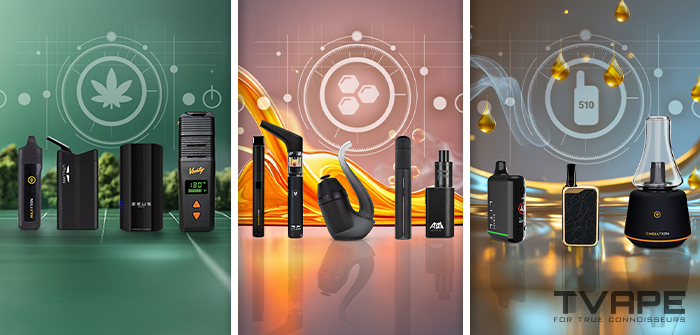
In this guide, we’ll break down the best temperature settings for vaping across all major device types, including:
- Dry Herb Vaporizers
- Dab Pens and Concentrate Vaporizers
- Electric Dab Rigs and E-Nails
- 510 Thread Batteries
The Role Of Terpenes In Vaping Temperature
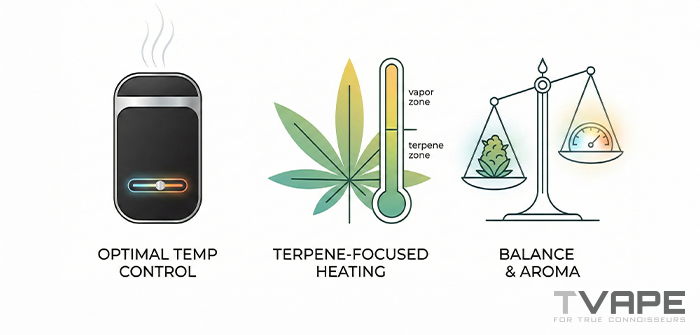
The first step in understanding why temperature matters so much in vaping is to grasp the concept of terpenes. Terpenes are the aromatic compounds responsible for the flavor and scent of cannabis. They also influence how vapor feels and how a session unfolds. As temperature changes, terpene behavior changes accordingly.
Most terpenes are very heat-sensitive. They begin to evaporate at relatively low temperatures compared to cannabinoids. Compounds such as pinene, myrcene, and limonene begin to release their aroma well before thick vapor appears. Without getting too technical, this means that the flavor of your herb will release before the cannabinoids, for the most part. This is why lower temperature sessions often taste brighter and more strain-specific, even if vapor production feels lighter.
As temperature rises, terpene release accelerates, but so does degradation. Once the temperature rises too high, delicate terpene structures break down rather than vaporizing cleanly. Flavor flattens, harsh notes appear, and the vapor loses its layered character. This is the point at which vapor still appears dense, but the taste quality drops sharply.
This behavior explains why terpene-rich concentrates and flowers respond best to lower settings. Live resin, live rosin, and fresh dry herb all contain volatile aromatic compounds that shine in the lower to mid temperature ranges. When heat stays controlled, vapor carries clearer flavor and feels smoother on the inhale.
Higher temperatures shift the balance toward raw cannabinoid extraction at the expense of terpenes. Vapor becomes thicker and more intense, but much of the original aroma is lost. For some users, this trade-off is acceptable, but it is important to recognize that flavor loss comes from terpene breakdown, not just from herb/concentrate quality.
If flavor matters, temperature becomes a tuning tool rather than a power setting. Start lower, let the aroma develop, then increase the heat only when the vapor thins. This approach preserves terpene expression while enabling full extraction later in the session.
Best Temperature For Vaping Dry Herb
Finding the best temperature for vaping dry herb is less about hitting one exact number and more about understanding how heat affects cannabinoids, terpenes, and vapor production. Dry Herb Vaporizers work by heating plant material to vaporize active compounds without burning the herb. This gives you more control than smoking, but it also means temperature choice directly shapes flavor, strength, and overall experience.
Most dry herb vaporizers operate between 160°C and 220°C (320°F and 428°F). Staying within this window avoids combustion while allowing you to tailor each session to your preferences.
Low Temperatures: Flavor and Clarity
160°C–180°C (320°F–356°F)
This range is often considered the optimal temperature range for a dry herb vaporizer if flavor is your top priority. At lower temperatures, lighter terpenes vaporize first, producing aromatic, smooth vapor with minimal harshness. Effects feel clear-headed and functional rather than heavy. Vapor production is lighter, but the taste is clean and precise. This range works well for daytime use or shorter sessions where subtlety matters more than intensity.
Medium Temperatures: Balance and Consistency
180°C–200°C (356°F–392°F)
For many users, this is the best temperature for a dry herb vaporizer overall. Cannabinoids like THC vaporize efficiently here while still preserving a good portion of the terpene profile. Vapor becomes denser, effects feel more noticeable, and sessions feel well-rounded without edging into harshness. If you want a single setting that works across most strains and devices, the middle range is usually the safest choice.
High Temperatures: Strength and Full Extraction
200°C–220°C (392°F–428°F)
Higher temperatures prioritize potency and completeness. Heavier cannabinoids and remaining compounds release more readily, producing thicker vapor and stronger effects. Flavor becomes more toasted and less nuanced, and draws may feel warmer or drier. This range suits users who want to extract everything possible from their material in fewer draws. Pushing past this range risks combustion, which defeats the purpose of vaporizing.
Convection vs Conduction Considerations
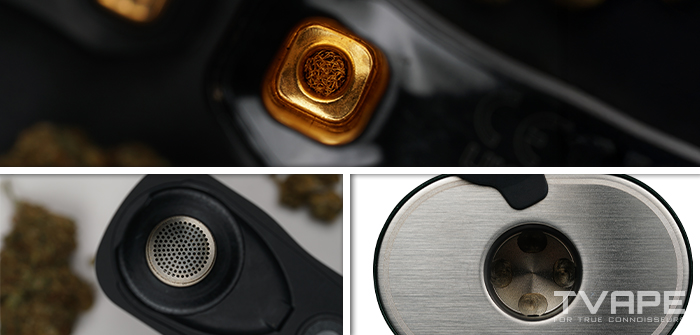
Temperature is a key factor in achieving the results you want, but it does not behave the same way across all vaporizers. Two devices can display the same number yet feel different because heat is delivered differently. That is where the heating method comes into play. Let’s keep it simple.
The 2 main heating modes you will encounter are conduction and convection, and you have probably heard these terms in science class or even in cooking. The concept is the same here. Conduction is the transfer of heat through direct contact, such as food touching a hot pan. Convection is heat carried by moving hot air, like an oven.
Conduction Vaporizers are a more direct and energy-efficient approach, but they can cause uneven extraction, with the outer layer darkening while the center still requires more time. That is also why conduction users often end up running warmer or stepping higher, not because conduction requires a higher temperature to work, but because higher heat is the quickest way to push vapor density when flavor is not the priority. Conduction sessions also benefit more from stirring or lightly moving the load, since it helps rotate fresh surface area into contact and evens out the extraction.
With Convection Vaporizers, the heater must first warm the air, then push it through the load. That usually takes more power, but it also tends to heat the herb more evenly, which is why convection is often associated with cleaner flavor and more consistent extraction. In practice, you might find you do not need to chase the highest temperature as quickly, because the heat is reaching more of the material at once instead of cooking one contact point harder than the rest.
No matter which style you are using, gradual stepping usually works. Start lower for flavor and smoothness, then increase as vapor thins. If you want a deeper breakdown of this, check out our conduction vs convection guide.
What is the best temperature for dabbing?
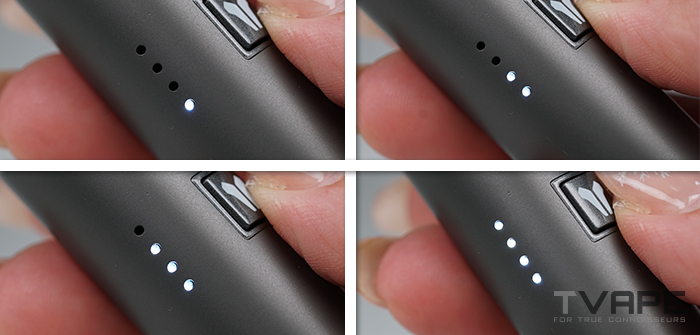
A lot of the same temperature ideas still apply here. Lower settings usually bring out more flavor; higher settings usually produce more vapor density; pushing too hot tends to be harsh. The difference with dabbing is that concentrates behave differently from dry herb, which changes how temperature is experienced during the session.
When discussing the best temperature for dabs, it’s important to clarify one key point: the temperature you set on a Concentrate Vaporizer is not the same as the actual temperature the concentrate reaches. What matters is the concentrate film temperature on the hot surface, not the displayed number on the screen.
That is the thin layer of concentrate that spreads across the cup, coil, or insert as you inhale. That surface can be hotter or cooler than the displayed setpoint, depending on how the device is built and how the dab melts and spreads.
Real-world temperature is influenced by heater material (quartz, ceramic, or metal), sensor placement, airflow, preheat behavior, load size, and the uniformity of the concentrate spread.
Why Lower Dabbing Temperatures Taste Better
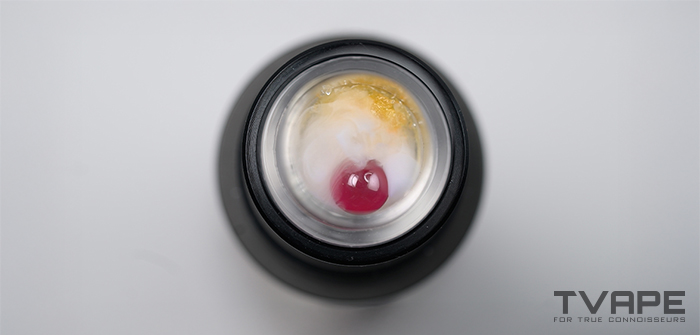
We already covered why lower temperatures tend to preserve flavor in general, and that principle does not change when you move from dry herb to concentrates. What does change is the temperature window the material operates in.
Dabbing is typically done at higher temperatures than dry herb because concentrates are denser, melt into a thin film, and need more energy to vaporize efficiently. Because of that, a “low temperature” dab is still numerically hotter than a low-temperature dry herb session. That difference often causes confusion, but the underlying rule stays the same.
The reason lower dabbing temperatures taste better is simple: aromatic compounds vaporize more readily than the compounds that determine vapor density. At lower temperatures, these lighter compounds are released cleanly before degradation begins. As temperature increases, vapor production becomes more aggressive, but the same heat that creates bigger clouds also breaks down delicate flavor molecules and introduces harsher byproducts.
Best Temperature Settings for Dabbing
Based on common consumer guidance and real-world heater tuning, these ranges cover most use cases. It’s important to understand that all recommendations are subjective, as they depend on the user’s preferences.
Flavor-Forward / Terpene-Preserving: 215°C–245°C (419°F–473°F)
This is generally the sweet spot for terpene-rich concentrates. Vapor is smooth, aromatic, and expressive, with minimal harshness. Many modern e-rigs perform best here, some don’t even reach as low as this, but generally speaking, the lowest you can go will always produce the best flavors.
Balanced / Full Extraction: 245°C–285°C (473°F–545°F)
This range delivers thicker vapor and stronger effects while still remaining manageable for most users. Flavor begins to lessen, but extraction feels more complete. This is often where users settle for everyday sessions, as it delivers decent flavor while still providing more vapor output.
Cloud-Focused / Harshness Increases: 285°C–315°C (545°F–599°F)
Usually this range is about the maximum you can use without simply combusting your concentrates. In this range, vapor production spikes, but flavor quality drops quickly. Residue buildup increases, and draws become noticeably harsher. This range is more about intensity than taste. Many users pair this range with a water filtration system or, with ice filtration like the Iceborn 3 (where compatible).
Avoid: >322°C (>600°F)
At this level, dabs lose most strain character and become uncomfortable for many users. From both a quality and chemistry perspective, this zone offers little upside.
For most users asking what the best temperature for dabbing is, the answer looks something like this:
- Flavor: ~215°C–245°C (420°F–475°F)
- Balanced: ~245°C–285°C (475°F–545°F)
- Clouds: ~285°C–315°C (545°F–600°F)
- Avoid: ≥322°C (≥600°F)
How Temperature Works on Different Concentrate Vaporizers
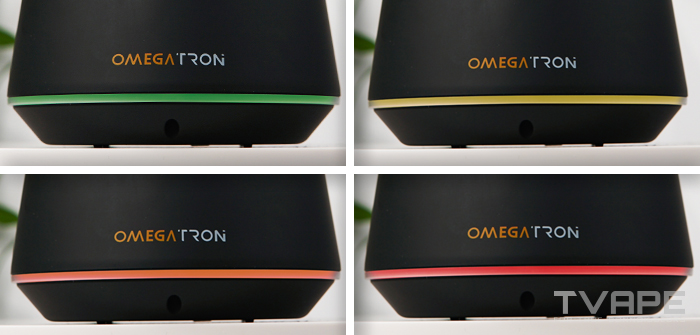
Temperature control feels very different depending on the device you use. A Dab Pen, an Electric Dab Rig, and an e-nail all apply heat differently, even when the displayed number appears similar. Heater size, surface area, airflow, and how the concentrate spreads all affect how hot a dab actually feels in use. That is why the same temperature can taste smooth on one device and harsh on another.
Below, I’ll walk you through how temperature behaves across these three device types and how to adjust your settings to match each one.
Dab Pen Temperature Settings
Dab pens rely on small heaters and compact chambers, so heat ramps up quickly and concentrates spread into a very thin layer. As a result, dab pens often feel hotter than the temperature shown on the screen.
Most dab pens keep things simple by using voltage settings instead of true temperature control. Voltage controls how much power is sent to the heater, which indirectly affects how hot it gets. Higher voltage delivers more power and faster heating, while lower voltage slows things down and keeps vapor production more controlled.
Over time, dab pens have become more sophisticated. Some newer models offer precise temperature settings and refined control software, and a few use actual temperature sensors. However, many pens that display a temperature are still estimating rather than directly measuring the surface the concentrate is touching. Without a sensor at the heating surface, the number shown is best treated as a reference point, not an exact reading of the concentrates temperature.
Electric Dab Rig Temperature Settings
Electric Dab Rigs are larger, more stationary devices, and that physical size matters. They use bigger heating elements and larger chambers than dab pens, which means there is more surface area and more material involved in the heating process. Because of that, temperature changes happen more gradually and are easier to sustain during a draw.
Most e-rigs are designed to hold a target temperature over time rather than heat up as fast as possible. This makes the temperature feel more stable in use, especially with larger dabs, since the heating surface is less likely to cool down mid-session. The added thermal mass also helps distribute heat more evenly across the concentrate as it melts and spreads.
Electric dab rigs are also more likely to use dedicated temperature sensors and closed-loop control systems. While the displayed number still does not represent the exact temperature of every point on the surface, it is generally a closer reference than what you get with smaller portable devices. This makes temperature settings more repeatable from session to session.
In practical terms, e-rigs make temperature easier to manage. Lower settings still emphasize flavor, higher settings increase vapor output, but the transitions between those ranges tend to feel smoother and more predictable due to the way these devices apply and maintain heat.
How Voltage Maps to Temperature for 510 Thread Battery
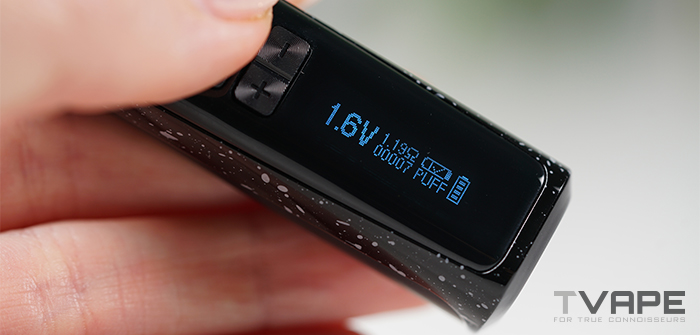
With 510 Thread Batteries, you are usually not setting temperature directly. Instead, you are controlling voltage, which determines how much electrical power is sent to the cartridge’s heating element. That power is converted into heat at the coil, and the coil then warms the concentrate absorbed into the wick. What matters in practice is the temperature of the thin concentrate film inside the cartridge during a draw, not the number shown on the battery.
Because cartridges differ in coil resistance, concentrate thickness, airflow, and internal design, voltage does not translate to the same temperature across all carts. A setting that tastes clean on one cartridge can feel harsh or underpowered on another. For this reason, voltage guidance is best treated as a range, not a fixed target, and dialing in usually means starting low and adjusting in small steps based on vapor quality rather than chasing a specific number.
Best Voltage Settings for 510 Thread Battery
Low Voltage: 1.8V – 2.4V (Flavor and Control)
This range favors flavor and smoothness. Concentrate heats gradually, which protects lighter terpenes and reduces harshness. Vapor appears thinner, but aroma stays clear and strain-specific. This setting works well for live resin, live rosin carts, and users who prefer short, controlled pulls. Smell output also stays lower at these voltages. The 1.8V is usually where many of the pre heat temperatures stay at.
Mid Voltage: 2.5V – 3.2V (Balanced Performance)
This is where most people settle for everyday use. Vapor density increases, effects feel stronger, and flavor remains acceptable for most concentrates. Distillate-based cartridges usually perform best here. Heat reaches the concentrate quickly without overwhelming the wick, which keeps hits consistent across multiple draws.
High Voltage: 3.3V – 4.2V (Intensity Over Flavor)
Higher voltage produces thicker clouds, but flavor drops fast. Concentrates heats aggressively, which increases the chance of burnt notes and residue buildup inside the cartridge. This range suits thicker concentrates or short sessions where potency matters more than taste. Extended use here often shortens cartridge life.
Final Thoughts
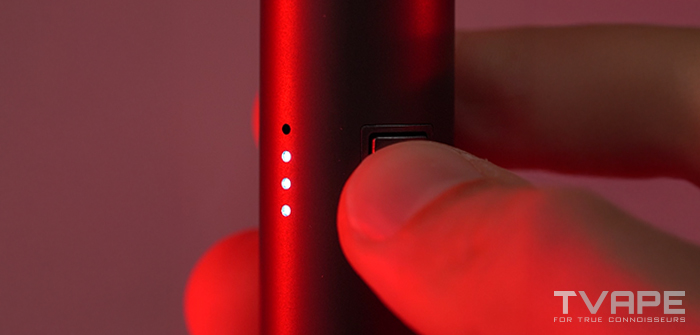
When people talk about finding a “sweet spot,” they usually mean a temperature number. That’s where things go wrong.
The sweet spot isn’t just a setting. It’s the result of how the device reaches that temperature.
Most advice says “start low and work your way up,” which sounds sensible, but what rarely gets explained is why that can give misleading results if you are not paying attention.
The reason it can be misleading is due to a phenomenon called thermal saturation or “heat soaking.” When you gradually increase the temperature, the device’s internal components, the oven walls, the heater, and even the air path accumulate energy over time.
By the time you reach your target temperature after a few minutes of “stepping,” the entire chassis is holding significantly more heat than it would if you had just turned it on and set it to that same number from a cold start. This means two sessions at the exact same temperature can produce vastly different vapor quality depending on whether the device was “warmed up” through a cycle or started fresh.
Furthermore, the type of heating technology (conduction or convection) dictates how this heat is managed. In conduction-based systems, the material continues to cook as long as it touches the oven walls, making the “time-at-temperature” variable just as important as the temperature itself.
Users often blame their device for being “inconsistent” or “inaccurate” when they notice these differences, but the hardware is usually performing exactly as intended. The inconsistency stems from the testing method, which results in the device’s thermal behavior simply being different in each scenario.
The main idea we want you to understand here is that: Temperature readings don’t tell the full story.
If you are not intentional about how you test, you can end up “finding” a sweet spot that only exists under very specific conditions, like a stepped-up session, but not in real-world use. That’s where people get confused, thinking a device is inconsistent or that the temperature control is inaccurate, when in reality, their testing method changed the outcome.
Finding a real sweet spot means controlling how you arrive at a temperature, not just which temperature you choose. When your starting point, warm-up behavior, and ramp pattern are consistent, the feedback you get becomes reliable. When they are not, the conclusions you draw are unreliable.
So the goal isn’t to stop stepping up, or to always start hot, or to follow one “correct” method. The goal is to be deliberate. Once you understand that the path to a temperature affects the result, you stop chasing numbers and start evaluating behavior. That’s when temperature tuning becomes predictable rather than frustrating.
FAQs: Best Temperature Settings for Vaping
What is the best temperature for vaping cannabis?
For dry herb, most users stay between 180°C and 220°C (356°F–428°F). Lower temperatures emphasize flavor and lighter effects, while higher temperatures increase vapor density and extraction.
Do higher temperatures get you more effects?
Yes, higher temperatures extract cannabinoids faster and more completely. Past a certain point, flavor drops and irritation increases, so balance matters more than max heat.
What is the best temperature for dabbing?
Most users prefer 215°C–285°C (420°F–545°F), depending on taste versus intensity. Lower settings preserve terpenes, mid-range offers full extraction, and very high temps trade flavor for clouds.
Does vape temperature control really matter?
Yes. Temperature control affects flavor, smoothness, potency, smell, and device wear. Small changes can dramatically alter the experience.
Why does the same temperature feel different on different devices?
Displayed temperature does not equal surface or material temperature. Heater design, airflow, sensor placement, and load size all change how heat transfers in real use.
What voltage should I use on a 510 thread battery?
Most cartridges perform best between 2.4V and 3.2V. Lower voltage preserves flavor, while higher voltage increases vapor but raises harshness and residue risk.
Do lower temperatures reduce smell?
Yes. Lower temperatures release fewer volatile compounds and produce lighter vapor, which dissipates faster than dense, high-temperature clouds.
Can high temperatures damage my vaporizer or cartridge?
Repeated use at very high temperatures accelerates residue buildup, stresses coils and atomizers, and shortens device lifespan.
Is there a temperature I should avoid completely?
For concentrates, temperatures at or above 322°C (600°F) are generally avoided due to harshness, flavor loss, and increased formation of unwanted byproducts.